OPTICAL ILLUSION from Elvira Fernadez-Luna
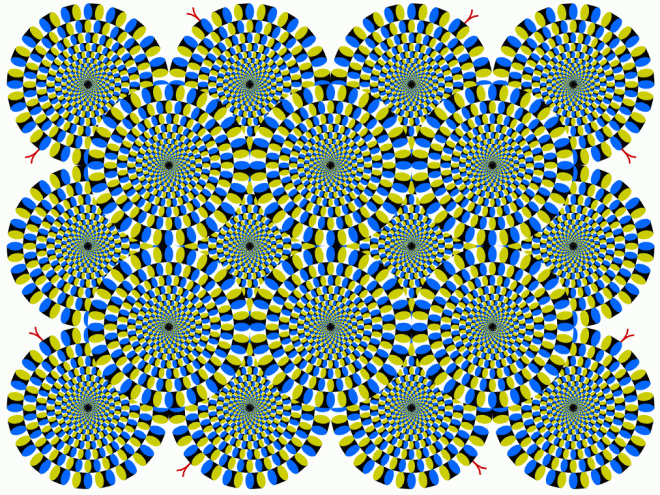
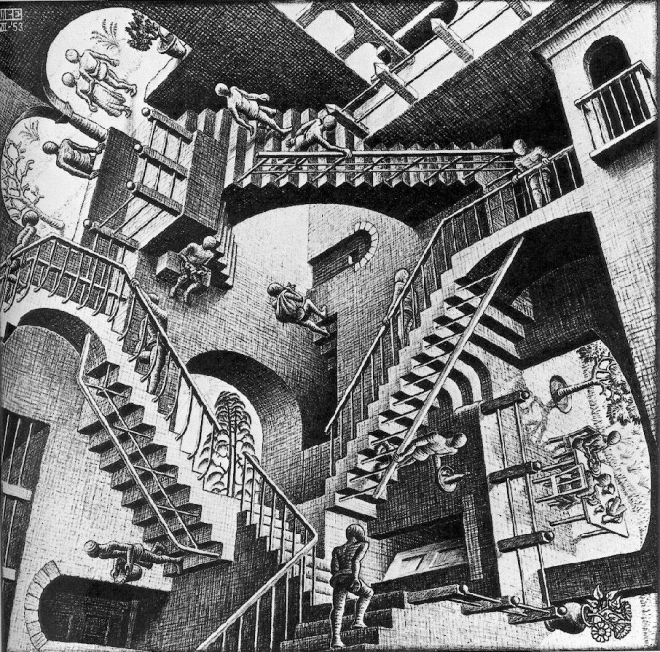
An image in which we can perceive something that is not physically in the image, can be interpeted in different ways or represent impossible perspectives.
GESTALT PRINCIPLES OF PERCEPTION


Gestalt (which means shape in German) psychology attempts to understand psychological phenomena by viewing them as organised and structured wholes rather than the sum of their constituent parts. In the 30s and 40s Gestalt psychology was applied to visual perception, most notably by Max Wertheimer, Wolfgang Köhler, and Kurt Koffka who founded the so-called gestalt approaches to form perception. More specifically, they tried to explain human perception of groups of objects and how we perceive parts of objects and formwhole objects on the basis of these.
Let´s watch a video
GESTALT PRINCIPLES
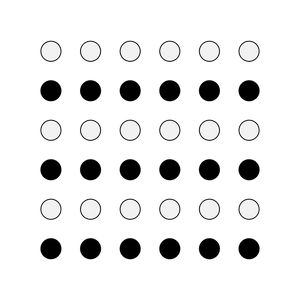
LAW OF PROXIMITY: Elements of an image that are closer to each other are perceived as a figure or a group.


2. LAW OF SIMILARITY: Elements of an image that are similar or the same are perceived as a unit.

3. LAW OF PRÄGNANZ (PAST EXPERIENCE): The tendency to interpret ambiguous images as simple and complete, versus complex and incomplete. Reality is organized to the simplest form possible.


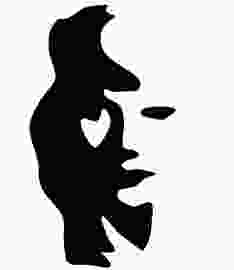
4. LAW OF FIGURE AND BACKGROUND: In an image, figure and background cannot be perceived simultaneously.



5. LAW OF CLOSURE: our sight tends to complete unfinished shapes or figures whent the contours are arranged in a continuous, specific direction.


6. LAW OF CONTINUITY: Elements that are arranged in the same direction are perceived as a unit.


Let´s see some optical illusions:
https://verne.elpais.com/verne/2016/01/27/articulo/1453897011_477533.html
http://www.magicmgmt.com/gary/oi/index.html
TASK 1:Op Art Cube
Our project: Create a three dimensional cube using geometric Op Art Designs. You will use the elements and principles of design to manipulate lines and shapes to create optical illusions of movement on flat space. You will then build the three dimensional cube.
Materials: pencil, rubber, , black marker,cardboard A4, scissors and glue.
STEP 1:


STEP 2:
Draw a different Illusion inside each 3 x 3 square on your cube pattern. Draw with pencil light until you get it right.


STEP 3: Paint your illusions in black and white using marker.


Step 4: Cut out your finished cube . Do not cut off the tabs. Fold and crease each tab and each line as shown in class. Then glue or tape your cube together. You need to write your name on one of your designs in a corner small. You can also write your name on the inside of your cube in pencil.


Here you have some examples for your project.


