DIHEDRAL, AXONOMETRIC, CAVALIER, CONICAL

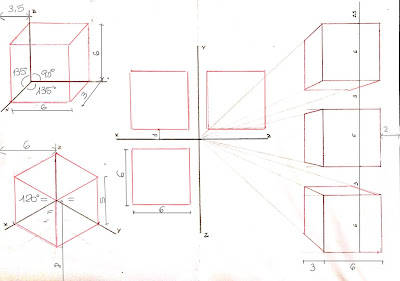
DIHEDRAL

CAVALIER

CONICAL PERSPECTIVE DRAWING
ONE POINT LINEAR PERSPECTIVE

TWO POINTS LINEAR PERSPECTIVE

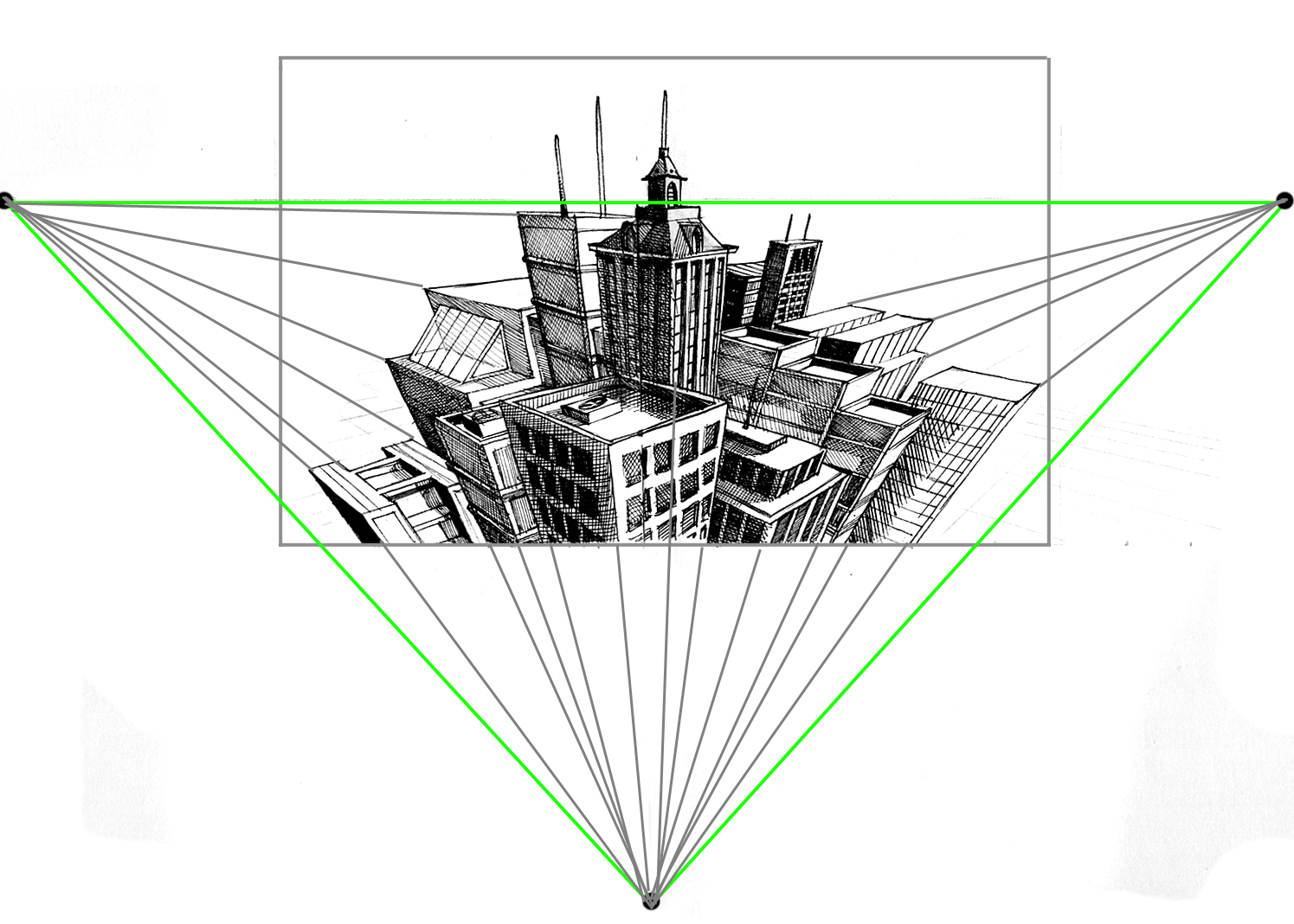
THREE POINTS LINEAR PERSPECTIVE

MORE ABOUT THE DIFFERENT SYSTEMS OF REPRESENTATION
DIHEDRAL, AXONOMETRIC, CAVALIER, CONICAL
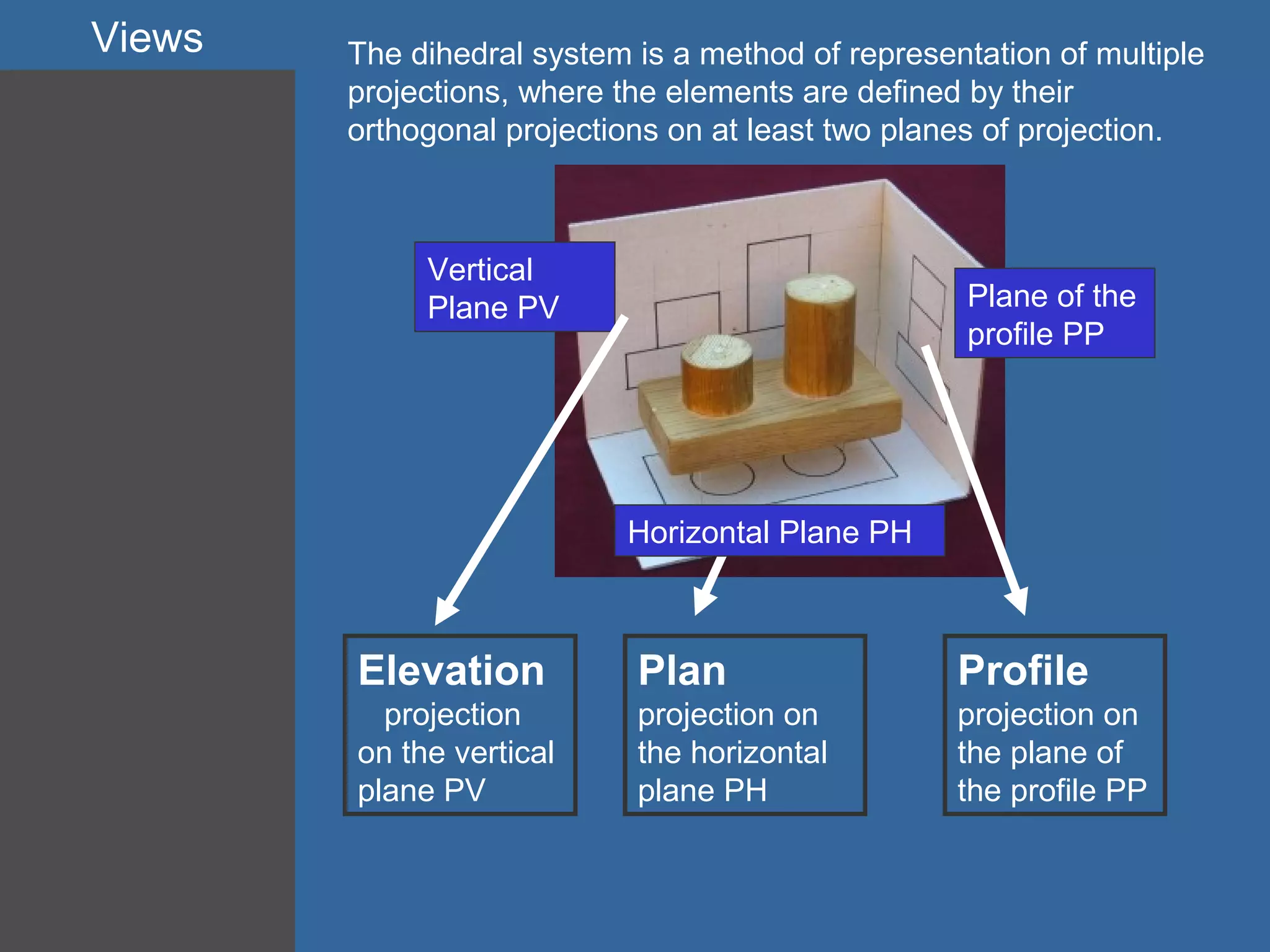
DIHEDRAL
CAVALIER
CONICAL PERSPECTIVE DRAWING
ONE POINT LINEAR PERSPECTIVE
TWO POINTS LINEAR PERSPECTIVE
THREE POINTS LINEAR PERSPECTIVE
MORE ABOUT THE DIFFERENT SYSTEMS OF REPRESENTATION
The links between circumferences have a direct application in the construction of technical curves such as the oval, the ovoid or the spiral.
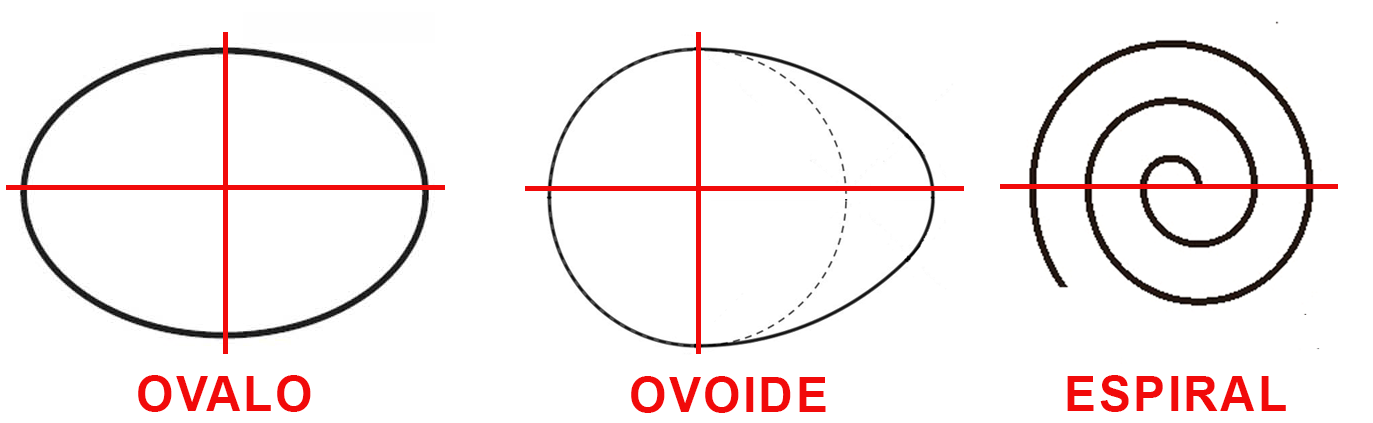

The ovoid is a flat and closed curve, symmetrical only with respect to its major axis, and formed by four arcs of circumference, of which two are equal and the other two are unequal.

The spiral is a flat, open and continuous curve that is configured by a point that moves uniformly along a straight line, this being fixed at a point through which it rotates with a constant angular value.

If the spiral is generated by regular polygons, it is called a volute.
Now you will learn how to draw Ovals, Ovoids and Spirals.
In spanish we call them "curvas técnicas". You will find that in english it is translated as either engineering or technical curves.
Here are some video tutorials for you to practice at home:
1- Draw an oval given the short axis CD.
2- Draw an oval given the long axis AB.
3- Draw an ovoid given the short axis AB.
4- Draw an involute of an equilateral triangle.
ACTIVITY EXTRA: THE FIBONACCI OR GOLDEN SPIRAL


If we look around us we can see that the shapes, triangles, squares, hexagons, are related to each other to occupy a large space; that is to say, they have interior lines that distribute and order the shapes. These are their structures that provide order and proportion. These structures are called tessellations.
A tessellation or tiling is the covering of a surface, often a plane, using one or more geometric shapes, called tiles, with no overlaps and no gaps. In mathematics, tessellation can be generalized to higher dimensions and a variety of geometries.

Structures can be:
Regular: the elements that compose it are regular and follow a regular order. Symmetrical or radial organisations tend to predominate.
Irregular: they do not have a regular order and their elements are irregular. They are complex structures.


The shapes are related in space by structures that we call Tesselations. Thanks to this organisation, we can create modules that repeat until we fill the whole area.
The movements we can make in space are:


